
The poster we made for my kitty who was missing
For most of my life, up until my twenties I dealt with anxiety. From overworrying late at night to full blown daily panic attacks.
Learning about how my body, brain and nervous system operate, has been THE gamechanger for me.
Today I would love to explain to you one the most impactful physical processes and how you can feel in charge over your experience when it comes to anxiety.
The Almond-Shaped Smoke Detector
It’s actually quite simple. We have the amygdala, a tiny, almond-shaped detector in the brain that constantly scans our lives to see if something is dangerous.
The moment the alarm goes off, it floods the body with cortisol and adrenaline, shifting the system into "fight-or-flight" mode to react to the threat. This is a vital survival mechanism—it’s the reason we can jump out of the way of a speeding car or run from an aggressive dog.

Two Paths to a Sensitive Alarm
There are generally two ways the amygdala becomes problematic:
Traumatic Experience: The amygdala learns a specific lesson: "We must prevent this from happening again at ALL costs." (Specific/Acute).
Chronic Stress: The amygdala becomes hyper-sensitized and begins to perceive almost everything as a threat. (General/Baseline).
The CEO Goes Offline
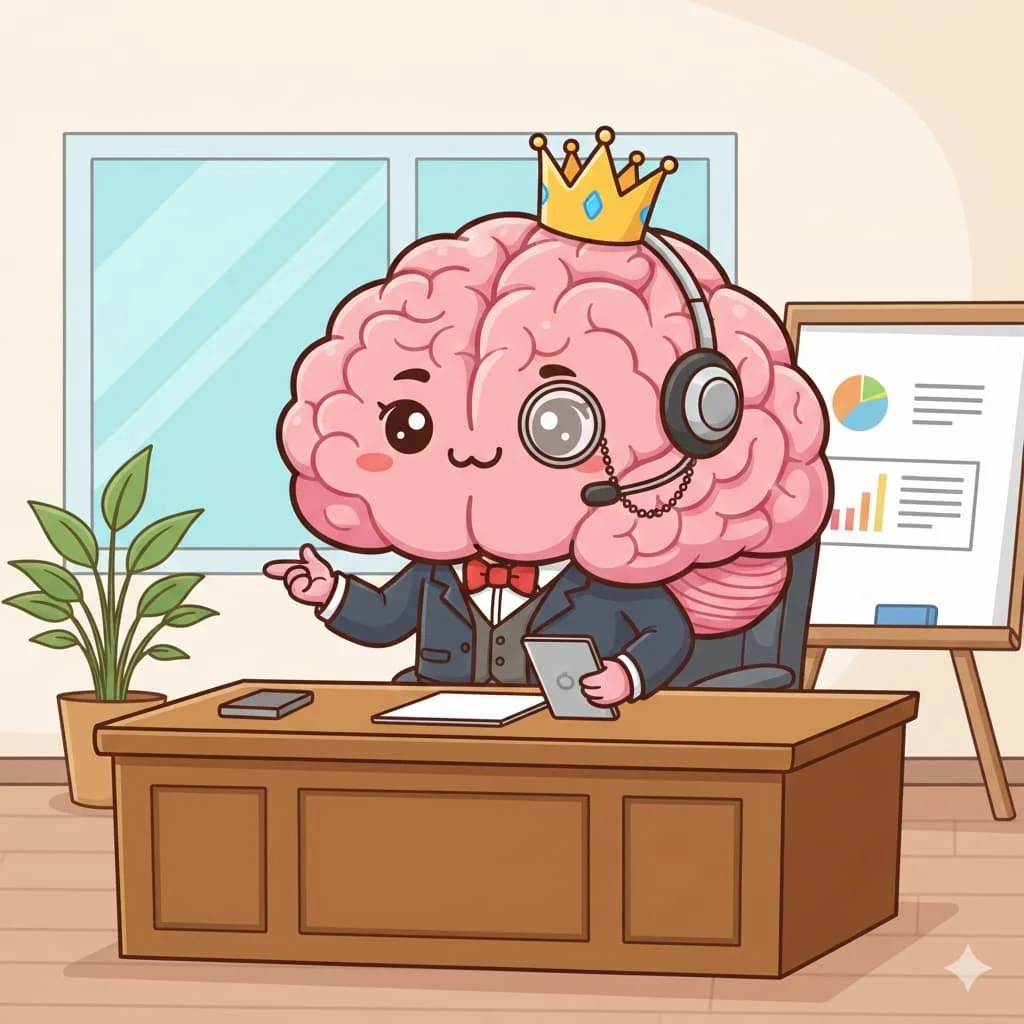
On the other hand, we have the prefrontal cortex (PFC). This is the part of the brain responsible for logical thinking, creativity, planning, and understanding social nuances. In a state of calm, the PFC receives all the blood flow it needs to do its job well.
However, the moment the amygdala sounds the alarm, the PFC is suppressed. It effectively goes offline. This makes it incredibly difficult to react or communicate in a grounded, conscious way because that part of the brain feels unreachable.
This process is called Neural Shunting. During a hijack, the brain literally redirects blood flow and oxygen away from the PFC to the survival centers. You aren't "choosing" to be illogical; your brain has physically diverted the power.
Why Logic Isn't Enough
Our amygdala learns through experience, not explanation.
You can tell yourself a hundred times that you don't need to be afraid, but the amygdala will still react based on the memory of when you were afraid. To truly desensitize the amygdala, we must gather new experiences that prove the coast is clear.
A Personal Example: The Phone Call
When I was 10 years old, we lost two kittens in a single year to traffic accidents.
In both cases, I was the one who picked up the phone to hear the bad news from the animal ambulance.
From that moment on, my heart would race every time the phone rang. It represented potential tragedy. For years, I dealt with this by simply ignoring calls and then frantically checking WhatsApp to see if my loved ones were "Last Seen" recently.
It was this kind of ‘Ahh I know it is annoying sometimes, but it is what it is‘ kind f thing.
Years later, a therapist told me: “If you keep ignoring it, you tell your brain it is unsafe every single time. You have to pick up the phone to prove to your brain that it’s almost never dangerous. Most of the time, it’s just the Ziggo calling.”
I knew she was right of course and decided to face it (partly also because I knew she would ask me about ti again next week haha).
The phone rang; I picked up shivering. It was a Ziggo, just as she said.
It rang again; my heart raced, but I answered. It was my brother, who had locked himself out.
The third time, I felt okay. It was just the dentist.
It was incredible to see my body shift after facing the fear only a few times. 🔥
Our bodies learn through experience, not logic.
The PFC can say "it's fine," but the body only catches up when we get on the field and play the game until the panic naturally subsides.
When you survive the experience, the amygdala records a new "safety memory" that overlaps the old "fear memory."

The Avoidance Trap
Avoidance is the amygdala’s favorite tool, but it’s also its biggest trap. When you avoid something scary, you feel a hit of relief. The amygdala interprets that relief as: "See? We survived because we ran away! We must run even faster next time."Exposure breaks this cycle.
The Goldilocks Rule (Graded Exposure)
In neuroscience, the Goldilocks Rule is about finding the "Just Right" level of intensity to ensure your brain actually learns.
1. The Comfort Zone (Anxiety Level: 0–2/10)
Safe and bored. No alarm is triggered. No Growth. The PFC has nothing to "practice" on.
2. The Stress Zone (Anxiety Level: 8–10/10)
Overwhelmed. The PFC is totally offline. Potential Trauma. The brain only remembers the terror.
3. The Stretch Zone (Anxiety Level: 4–7/10)
"Spicy" or jittery. Heart is racing, but you can still think.
Neuroplasticity. This is the sweet spot where "Extinction Learning" happens.
Practical Tools for the "Challenge Zone"
The Golden Rule of Exposure is this: Do not "quit" when the anxiety is at its highest.
Stay in the experience until you feel your heart rate drop even slightly. That drop is the exact moment your amygdala learns it is safe.
If your fear involves a conversation or a phone call, use these two anchors:
The Script Anchor: Write your opening sentence word-for-word. This reduces the "load" on your PFC so you don't have to think while your heart is racing.
The Physical Anchor: Press your feet firmly into the floor. This "grounding" keeps you in your body and prevents the dissociation that happens during a hijack.
What is one "Challenge Zone" activity you’ve been avoiding that you feel ready to face this week?
Share your goal in the comments!
Much love,
Iza
Want to continue talking for free?
Let’s explore how working with your body can help you feel more grounded, clear, and calm.
Book a free discovery call today and see if it’s the right fit for you.
Read more Stories With Ease

Mastering Stress and Overwhelm while Working - The power of the moments in between
Maintaining a healthy work-life balance that genuinely suits me is nowadays all about "the moments in between." For a long time, I considered this balance in a "work-hard-play-hard" manner…

A Journaling Exercise to Face Your Scariest Thoughts with Clarity and Ease
Today, I want to share a practice that has helped me countless times over the past year in navigating anxiety. Anxiety is one of the most overwhelming emotions I experience, and at times, it feels terrifying to look inward and truly face what’s there…

What to expect from an Mind-Body Reset™ class?
We’ll combine breath-work, somatic shaking, self-massage and reflective journaling. Together these tools help your nervous system unwind, release tension (physical and emotional), and activate your natural capacity to self-regulate.