6 Basics for calming anxiety that have nothing to do with mindset
Quick summary
Check your physical comfort: Tight clothing and cold can create sensations that resemble anxiety.
Eat and hydrate regularly: Low blood sugar and dehydration can increase stress responses.
Move your body: Help your body process physical stress and tension.
Prioritize sleep: Lack of sleep can make anxiety and emotional regulation harder.
Get to know your cycle: Hormonal changes can influence mood, anxiety, and how reactive you feel.
Explore caffeine: Caffeine can increase adrenaline and make your nervous system more reactive.
Start with one area: Identify what’s affecting you most and choose 2-3 small actions to change it today.

We can talk about breathing exercises and mindset work for anxiety ALL DAY LONG, but if you don’t have these 6 basics in place, nothing will change.
After my own journey with anxiety and 7 years of working with clients whose nervous systems keep waiting for the next shoe to drop, I know the foundation needs to come FIRST.
Here are the six areas to check in on (I can’t believe I’m ACTUALLY sharing number six with you guys!).
6 Basics for calming anxiety that have nothing to do with mindset
1. Wear clothes that aren’t too tight or cold.
A compressed chest or waist, and the physical response to cold, can feel similar to anxiety in the body. Your brain can interpret these sensations as a stressor and trigger anxious thoughts.
Looking back, the tops and crazy-tight high-waisted jeans I wore every day make my panic attacks in my early twenties make A LOT more sense. 😅
2. Eat and drink properly and regularly.
Low blood sugar and dehydration can trigger stress hormones like adrenaline and cortisol.
A few months ago, I worked with a client solely focussing on her eating habits, and her anxious feelings did a 180 in a couple of days.

3. Move your body regularly.
Yes, you’ve heard it before. But the research is clear.
Movement gives your body a way to process the physical activation that comes with stress, instead of staying stuck in tension and alertness.
4. Yes, we need sleep.
Another obvious one.
Everything gets harder when we don’t get enough sleep
(and yes, for most of us, that means 8H+/ night.)
5. Where are you in your cycle?
So often I’ve figured out two days later that the MAIN reason I suddenly felt anxious or upset had nothing to do with my partner (sorry Glenn), but everything to do with where I was in my cycle.
I’m still educating myself on this topic, but one thing I know: it influences A LOT.
Sometimes it’s not you. It’s your hormones.

6. Explore your relationship with caffeine.
This is something I’ll talk WAY more about because it has drastically changed my life.
I always thought I didn’t have any addiction issues, but caffeine turned out to be a big one - and incredibly hard to stop.
Caffeine increases adrenaline and can push you into a mild fight-or-flight state.
You might not notice an immediate response to coffee, but your baseline nervous system can still be affected, making you more reactive.
Weekly self-reflection 👇
So I’m inviting you to check in this week:
How are you doing in these six areas?
And don’t feel disheartened if most of these aren’t in place right now.
Choose one area to focus on first.
Write out your answers on these questions:
1. How is this area affecting your life right now?
2. What would your life look like if this area no longer played a destructive role? (And what would your life look like if nothing changed?)
3. What are the 2-3 things you can do TODAY to take better care of yourself in this area?
I’ve seen it time and time again: how much can change with a single decision to do SOMETHING differently.
Be experimental.
Try the wider jeans.
Wear the sweater.
Try decaf for just a week.
Let me know how it goes - I’d love to hear from you.
And save this list so you can come back to it.
Next week, I’ll be back with a practical framework for navigating conflicting needs without people-pleasing or abandoning yourself.
Frequently asked questions
Does this mean therapy or talking about my past doesn’t work?
No. Insight and awareness are important foundations. But lasting change often requires working with the body so the nervous system can update how it responds, not just understand why it responds that way.
How long does it take for the nervous system to change?
There is no fixed timeline. Nervous system change is gradual and happens through repeated experiences of safety, regulation, and integration over time.
What does it mean to feel safe in my nervous system?
It doesn’t mean feeling calm all the time. It means you can stay connected to yourself even when things feel intense, without becoming overwhelmed, shutting down, or reacting automatically.
How do I know if I’m in my window of tolerance?
You are generally within your window when you can stay present, think clearly, feel your body, and respond rather than react, even if stress is present.
What if I still get overwhelmed, even when I use the tools?
That usually means your system needs more safety and slower pacing. Regulation is not about pushing through, but about building capacity gradually and consistently.
Is it normal that relaxation feels uncomfortable?
Yes. For many people, relaxation initially feels unsafe because the nervous system has learned that being “on” equals safety or control. Learning to rest is part of the process.
What is the difference between coping and regulation?
Coping helps you get through a moment. Regulation helps your nervous system return to balance and increases long-term resilience.
Do I need to follow all six steps in order?
I would argue yes, although some of the steps may already be in place for you. Starting with the basics, inviting in a relaxation practice, and building your regulation toolkit are really the building blocks to then move to the other steps. To a certain extent, you could do steps 4, 5, and 6 at the same time, although it’s again important to move slowly and take your time.
Can I do this work on my own?
Some parts, yes. Many people can build awareness and practice regulation tools on their own. Deeper patterns often benefit from guided support so the system can stay within its capacity to process safely.
That said, even though you can do a lot of this work independently, it is often incredibly helpful to have someone guide you through the process. A skilled practitioner can both gently nudge you to step outside your comfort zone when needed—even when your system’s alarm bells are saying “don’t go there”and, on the other hand, help you slow things down and tone it back in when you’re moving too fast.
In this way, they act as a second pair of eyes from an objective perspective, helping ensure you’re moving through this sensitive work in the right order, at the right pace, and with enough safety for real integration to happen.
At With Ease, we offer Integrative Somatic Therapy, where together we work onthe patterns that keep you stuck, helping your nervous system build a greater sense of safety, and create the conditions for lasting change.
You can schedule a free introductory call here.
Why does my mind keep repeating the same thoughts, even when I know they are not true?
Because the brain prioritises prediction and safety over accuracy.
Familiar thoughts feel safer than unfamiliar perspectives, even when they are limiting.
What changes when my window of tolerance expands?
You become more flexible and less reactive. Life may not change, but your capacity to meet it does, which in fact can actually fully shift the way you show up and view the life around you. Allowing you to feel empowered and at ease.
Read more Stories With Ease

Mastering Stress and Overwhelm while Working - The power of the moments in between
Maintaining a healthy work-life balance that genuinely suits me is nowadays all about "the moments in between." For a long time, I considered this balance in a "work-hard-play-hard" manner…

A Journaling Exercise to Face Your Scariest Thoughts with Clarity and Ease
Today, I want to share a practice that has helped me countless times over the past year in navigating anxiety. Anxiety is one of the most overwhelming emotions I experience, and at times, it feels terrifying to look inward and truly face what’s there…
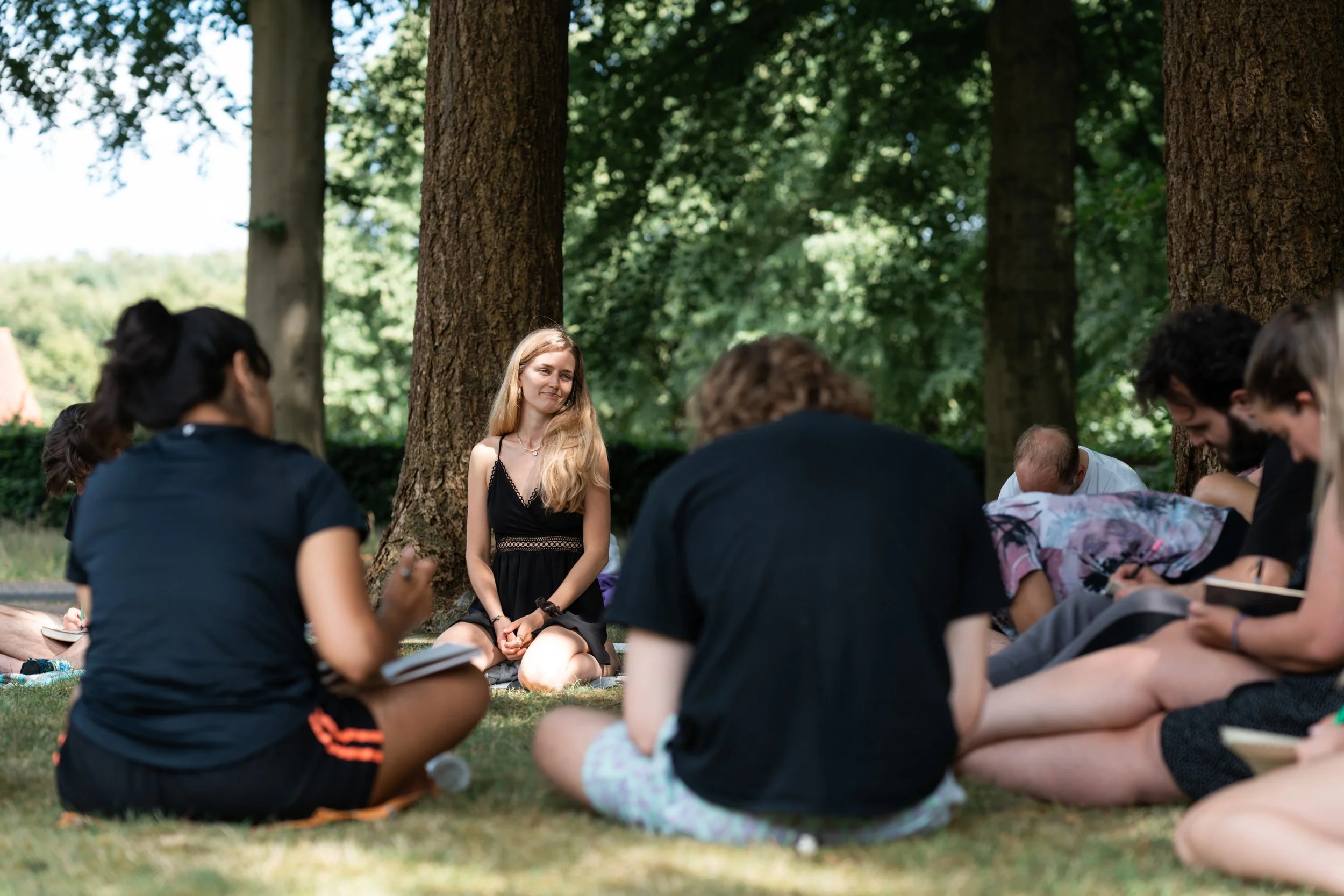
What to expect from an Mind-Body Reset™ class?
We’ll combine breath-work, somatic shaking, self-massage and reflective journaling. Together these tools help your nervous system unwind, release tension (physical and emotional), and activate your natural capacity to self-regulate.